

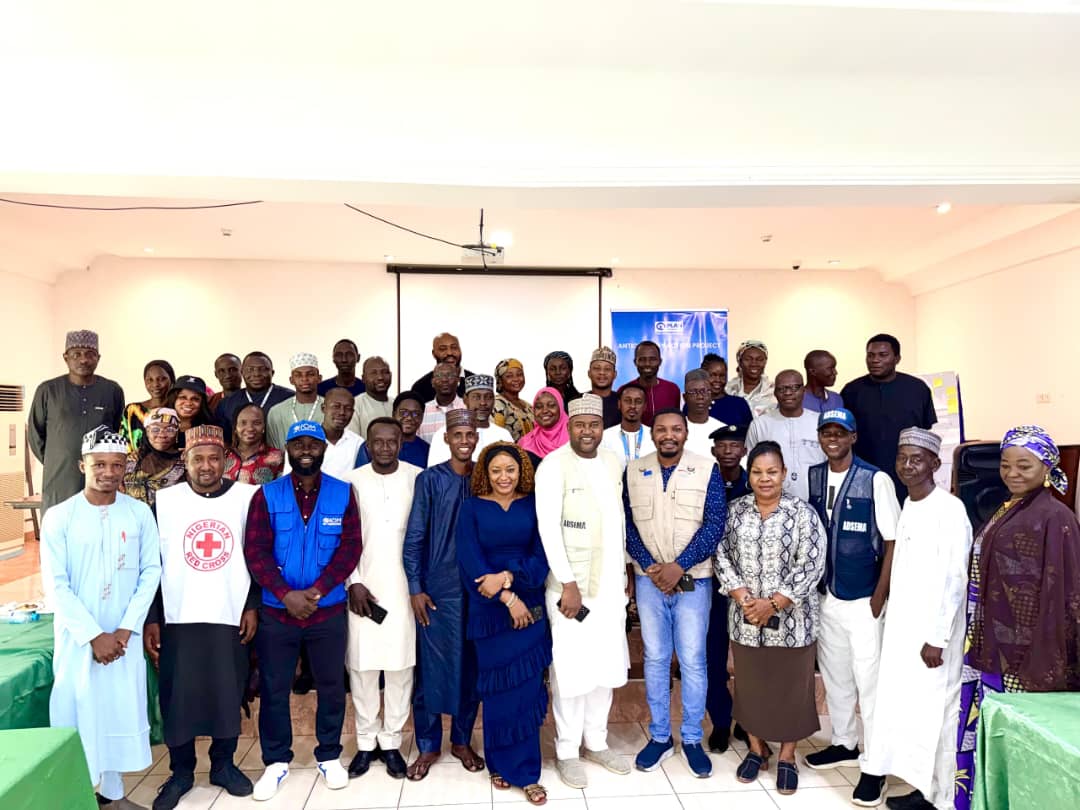

The Adamawa State Government, through the Adamawa State Emergency Management Agency (ADSEMA), has joined humanitarian and development partners in developing a harmonised framework to strengthen early action and disaster preparedness in the state.
The initiative was developed during a five-day technical engagement in Yola organised by Plan International Nigeria in collaboration with ADSEMA and supported by IOM, Caritas, SOKU, NRM, CATAI, GIZ and Haraf.
The engagement included a two-day training on Anticipatory Action and a three-day technical session focused on harmonising existing disaster preparedness approaches in the state.
Anticipatory Action involves using forecasts and early warning information to take preventive measures before a disaster occurs or a crisis worsens.
Stakeholders said the approach is particularly important for Adamawa, which faces recurring threats such as flooding, drought, disease outbreaks, windstorms, fire incidents and conflict-related displacement.
Speaking during the engagement, Plan International Nigeria’s Head of Humanitarian Programme, Dr Emmanuel Nuhu, said the training was designed to improve stakeholders’ understanding and practical knowledge of risk analysis, early warning systems, triggers, anticipatory financing and early actions.
Representing the state government, the Permanent Secretary and Executive Secretary of ADSEMA, Mrs Celine Laori, appreciated Plan International Nigeria and other partners for their continued support.
She called for closer collaboration between government institutions and develop
ment partners, urging organisations to properly coordinate their activities with relevant ministries and agencies before implementation.
Mrs Laori also proposed regular monthly coordination meetings to strengthen collaboration and support the development of a comprehensive framework.
During the technical sessions, participants reviewed the major hazards affecting the state, forecast information, impact-based forecasting, institutional responsibilities and coordination mechanisms.
They also conducted practical simulations on monitoring forecasts, activating triggers, making decisions, mobilising funds and implementing early interventions.
The exercise brought together officials from state ministries and agencies, local governments, national disaster-management and climate institutions, humanitarian organisations, civil society groups and the media.
At the end of the engagement, stakeholders produced a draft harmonised Adamawa State Anticipatory Action Framework.
The framework is expected to establish common procedures for monitoring risks, activating early-warning triggers, coordinating interventions and assigning institutional responsibilities.
It will undergo further technical review and validation before final adoption and implementation.
Stakeholders expressed optimism that the initiative would strengthen Adamawa’s ability to act before disasters escalate, reducing their potential impact on vulnerable communities.