

By Jessica John Bakari
Nigeria’s Safety and Antimicrobial Resistance of Mass Administration of Azithromycin in Children (SARMAAN) project has reached nearly 17 million children across 11 northern states this year, with stakeholders urging governments to sustain funding to keep the gains alive.
The programme, which distributes azithromycin to children aged 1 to 59 months, has administered more than 45.9 million doses since 2024.
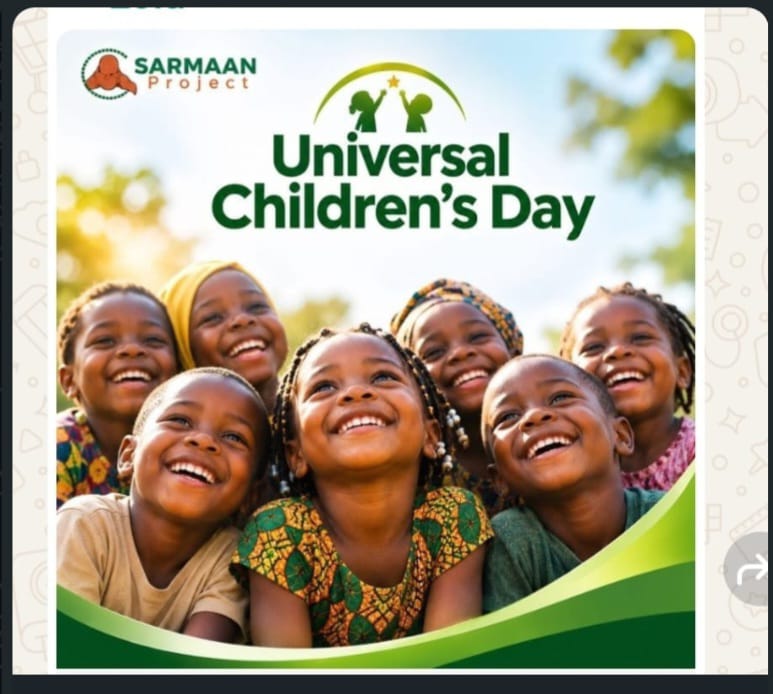
In a statement issued to mark Universal Children’s Day, the programme said evidence from Nigeria, Niger, Mali and Sierra Leone has shown that community-based interventions can reduce child deaths, particularly among children in hard-to-reach communities.
Nigeria’s under-five mortality rate declined from 132 to 102 deaths per 1,000 live births between the 2018 and 2023-2024 Nigeria Demographic and Health Surveys. However, the figure remains far above the Sustainable Development Goal target of 25 deaths per 1,000 live births.
The statement noted that most under-five deaths are caused by preventable and treatable illnesses, stressing the need to expand affordable interventions capable of reaching children outside conventional health facilities.
SARMAAN II, which began in 2024, expanded from one state to 10 in 2025 and 11 in 2026, covering Adamawa, Bauchi, Gombe, Jigawa, Kaduna, Kano, Katsina, Kebbi, Sokoto, Yobe and Zamfara States.
Through twice-yearly house-to-house distribution, the programme reached *16,932,422 children in 2026*, with more than 91,000 community drug distributors and data clerks trained to support implementation.
The programme is also being integrated with immunisation, seasonal malaria chemoprevention, neglected tropical disease campaigns and Maternal, Newborn and Child Health Weeks to maximise coverage and reduce the burden on families and health workers.
In 2026, SARMAAN activities were integrated with maternal and child health campaigns in Gombe and Jigawa States, as well as polio campaigns in Bauchi, Katsina, Sokoto, Yobe and Zamfara States.
The statement cited evidence from Niger, where the AVENIR trial found that twice-yearly azithromycin distribution to children aged 1 to 59 months reduced child mortality by 14 per cent, prompting the country to transition from research to a national programme.
In Mali, more than 11.6 million treatments have been delivered over three rounds, with the latest round in June and July 2026 reaching over 4.2 million children at 98 per cent reported coverage, including children in insecure northern communities.
Evidence from Sierra Leone also showed that integrating azithromycin distribution with routine immunisation and malaria prevention could improve child-survival outcomes, particularly among children who might otherwise die at home without accessing healthcare.
To strengthen local evidence, SARMAAN is monitoring programme coverage, mortality, safety and antimicrobial resistance, with surveys conducted in Zamfara, Kano and Sokoto States and at two major teaching hospitals.
Nine participating states have included SARMAAN activities in their Annual Operational Plans, with government commitments totalling ₦122.9 million, while 11 state champions, including three First Ladies and a Deputy Governor, are advocating for the programme.
Lead Investigator of SARMAAN, Professor Oliver Ezechi, said the programme was generating evidence to guide government decisions on child survival, with safety and antimicrobial resistance monitoring incorporated into its implementation.
He said the experiences of other African countries provided valuable lessons, but Nigeria’s own research findings would be critical in determining the intervention’s long-term policy and financing framework.
The statement called for the integration of azithromycin distribution into Nigeria’s Child Survival Action Plan and national guidelines, sustained domestic funding and continued collaboration with immunisation and other child-health programmes.
It stressed that the gains achieved through SARMAAN could only be sustained through consistent government commitment, adequate budgetary allocations and timely release of funds, ensuring that every child had access to life-saving interventions regardless of location or family circumstances.
PR JJB