

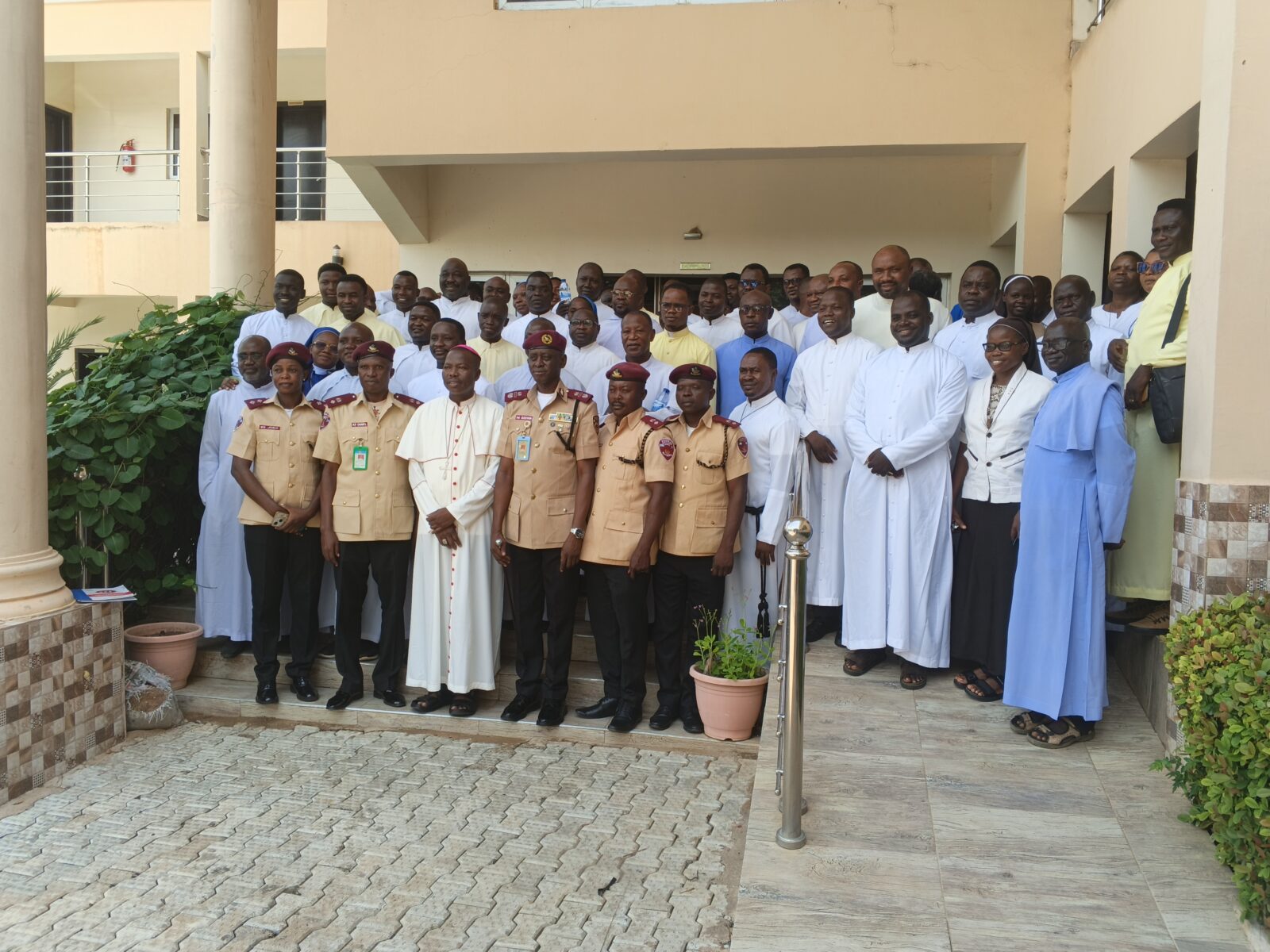
A road safety workshop organised by the Catholic Diocese of Yola in partnership with the Federal Road Safety Corps (FRSC), Adamawa State Sector Command, has culminated in a major policy shift within the diocese, with every deacon now required to obtain a certificate from a certified driving school before ordination to the priesthood.
The workshop, held at the Catholic Secretariat in Jimeta, brought together priests, deacons, religious sisters, seminarians and drivers from across the diocese to deepen their understanding of safe driving practices and traffic regulations.
Speaking during the training, the Catholic Bishop of Yola Diocese, Most Reverend Stephen Dami Mamza, announced that the diocese would henceforth make driving competence a prerequisite for priestly ordination.
According to the bishop, every deacon must undergo formal training at a certified driving school and present a valid certificate before being ordained a priest.
Bishop Mamza described the workshop as enriching and the first of its kind in the history of the diocese, admitting that despite years of driving, he had gained valuable knowledge from the training.
“I have learnt a lot during this workshop. There are things I never knew all this while driving. This programme has opened our eyes to the importance of responsible driving and compliance with road safety regulations,” he said.
He explained that the training focused on three major areas—driver’s licence acquisition, defensive driving and proper vehicle documentation, including the use of valid number plates.
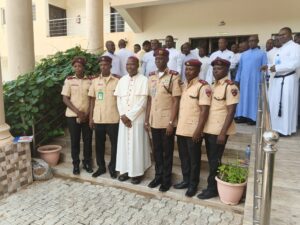
The bishop said the knowledge acquired would help reorient members of the clergy on road safety, promote responsible driving and safeguard lives, noting that the Church has a moral obligation to protect the lives of its priests and every road user.
The Adamawa State Sector Commander of the FRSC, Corps Commander Alphonsus Godwin, commended Bishop Mamza for initiating the programme, describing it as a proactive intervention that would contribute to reducing road crashes.
He urged participants to always wear seat belts, avoid the use of mobile phones while driving and strictly comply with highway codes and other traffic regulations.
In a presentation, Chief Route Commander Philip Denham took participants through defensive driving techniques, stressing the sanctity of human life and the responsibility of every driver to ensure the safety of passengers and other road users.
He encouraged participants to become ambassadors of road safety by planning their journeys ahead of time, getting adequate rest before long trips and maintaining their vehicles to ensure roadworthiness.
One of the participants, Reverend Father Maurice Kwairanga, described the workshop as timely and impactful.
He said the training had effectively introduced a new driving culture within the Catholic Diocese of Yola and expressed confidence that the lessons learnt would improve safety consciousness among priests and other church workers.