


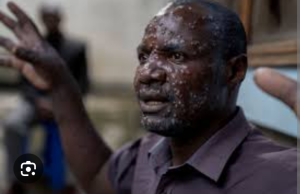
The World Health Organization (WHO) has declared a public health emergency of international concern (PHEIC) due to a new variant of the mpox viral disease in Africa. The WHO stated that mpox cases have been found in 13 African countries, and its new form is spreading, marking the second time in two years that the organization has issued the alert for the disease.
The outbreak of the viral infection in the Democratic Republic of Congo has spread to neighboring countries, leading the emergency committee to advise WHO Director-General Tedros Adhanom Ghebreyesus that the situation constitutes a public health emergency of international concern. Tedros accepted the advice, emphasizing that this is a matter of global concern. He also committed WHO to coordinating the global response, working closely with each affected country, and leveraging their on-the-ground presence to prevent transmission, treat those infected, and save lives.
The PHEIC declaration can facilitate research, funding, and international public health measures and cooperation to contain a disease. It triggers emergency responses in countries worldwide under the legally binding International Health Regulations.
Mpox can spread through close contact between individuals. While usually mild, it can be fatal in rare cases, causing flu-like symptoms and pus-filled lesions on the body. In this outbreak, a new variant known as clade Ib appears to be spreading more easily than the initial strain, clade I, which began the outbreak in the Democratic Republic of Congo.
The new variant has been detected in Burundi, Kenya, Rwanda, and Uganda.