

By Jessica John Bakari.
With public health leaders set to meet in Cape Town next week for the 18th World Congress on Public Health, Nigeria has a big child-survival story to take to the global stage.
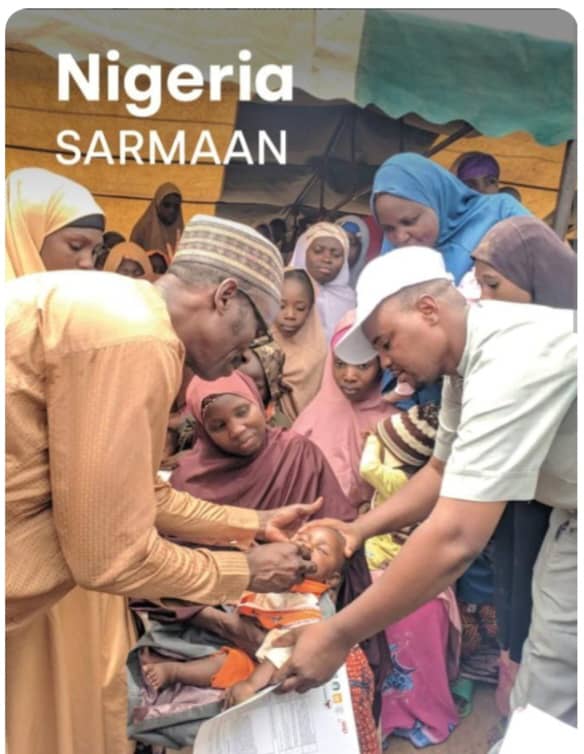
In 11 states across northern Nigeria, the SARMAAN programme, the Safety and Antimicrobial Resistance of Mass Administration of Azithromycin in Children 1-59 Months in Nigeria , has reached more than 16 million children.
The milestone comes as Nigeria records modest gains in child survival,Under-five mortality dropped from 132 to 102 deaths per 1,000 live births between the 2018 and 2023-24 Nigeria Demographic and Health Surveys.
The progress is linked to better immunization, exclusive breastfeeding, antenatal care, skilled birth attendance and treatment for childhood illnesses as still, Nigeria’s rate remains more than four times the SDG target of 25 per 1,000 live births,that means the gap is why large-scale delivery models like SARMAAN are drawing attention ahead of the Cape Town congress holding Sept 6–9.
SARMAAN is part of the regional REACH Network and delivers mass drug administration of azithromycin through a government-led, multi-partner approach, making it different, researchers say, is that safety monitoring and antimicrobial resistance surveillance were built into the programme from the start not added later.
A data from SARMAAN shows is that safety monitoring and antimicrobial resistance surveillance can be built directly into a mass drug administration project at scale,” said *Prof. Oliver Ezechi*, Lead Investigator of SARMAAN and Director of Research at NIMR. “Rigorous science and large-scale delivery do not have to compete; they can strengthen one another.
Project leaders say the results came from combining community engagement, frontline delivery, and strong state leadership,reaching children at this scale requires health workers, caregivers, communities and government systems to work together, said Dr. Zainab Shinkafi-Bagudu,SARMAAN Champion and global health leader said True equity is when an intervention can reach all children, regardless of where they live.
in Jigawa State, First Lady Hadiza Umar Namadi, also a SARMAAN Champion, said trust is the real currency, saying the numbers are important, but behind them are mothers, caregivers and communities who have opened their doors.
Sustaining that trust requires continuous engagement, respect for communities and strong government leadership.
Proffesor Robinson Daniel Wammanda, another SARMAAN Champion, noted the use of multiple delivery platforms was key to reaching children at this scale.
Discussions are now underway with government stakeholders to align SARMAAN’s lessons with broader child-health plans. At state level, the focus is shifting from project cycles to institutional ownership, integration, and sustainable financing.
As SARMAAN looks beyond its current phase, its experience reinforces a critical lesson for child survival,” the team said. “Interventions that demonstrate impact should not remain temporary successes.
The evidence, systems, trust and partnerships they create can become foundations for lasting change.
The World Congress on Public Health in Cape Town is expected to spotlight equity, inclusion and sustainability — themes SARMAAN says are already playing out in communities across northern Nigeria.
The SARMAAN Project is a child-survival, evidence-based programme designed to reduce under-five mortality in high-burden states in Nigeria. It implements Mass Drug Administration of azithromycin to strengthen health systems and improve child health outcomes.