

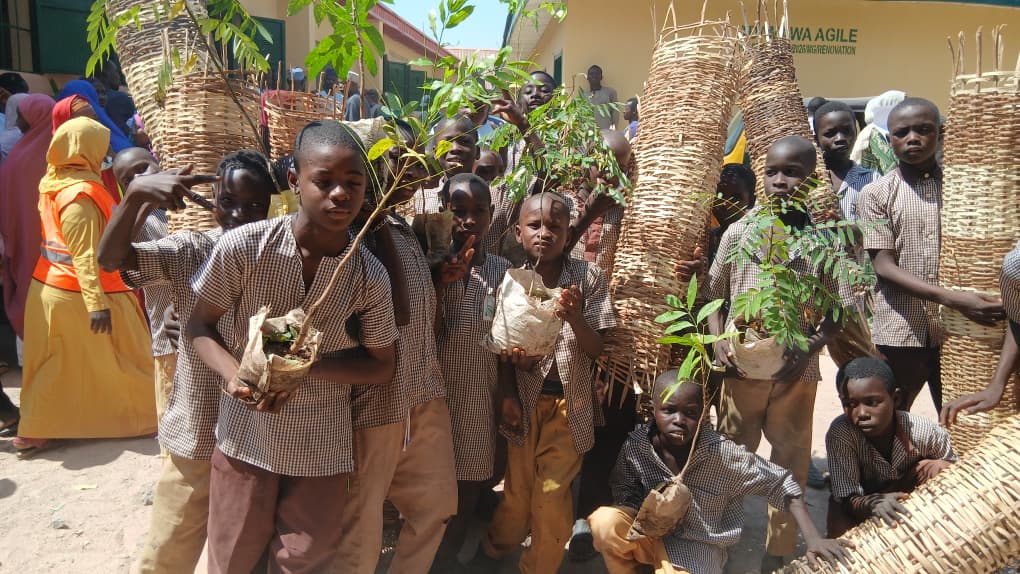
In a renewed effort to strengthen environmental protection and build community resilience against climate change, Plan International has distributed 600 tree seedlings to four communities in Adamawa State.
The intervention, which targets the effects of deforestation, flooding and environmental degradation, is expected to promote sustainable environmental practices while helping vulnerable communities adapt to changing climatic conditions.
The project coordinators, Daniel Musa and Nubwa Ibrahim, disclosed this separately in Imburu community, Numan Local Government Area, shortly after the distribution exercise.
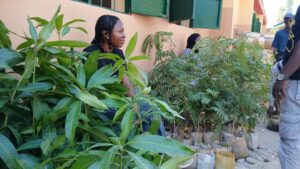
They explained that the initiative was part of the organisation’s commitment to supporting communities facing environmental challenges through practical interventions that encourage environmental conservation and climate change adaptation.
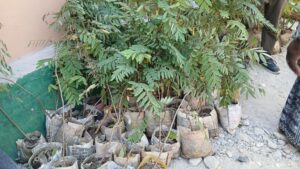
Under the programme, Limawa and Boronji communities in Yola North Local Government Area, alongside Imburu and Ngbalan in Numan Local Government Area, each received 150 trees of different varieties.
The distribution brings the total number of trees provided to the four communities to 600.
Musa said the intervention was an extension of Plan International’s ongoing environmental initiatives, noting that other communities had previously benefited from similar support, with plans to reach additional locations.
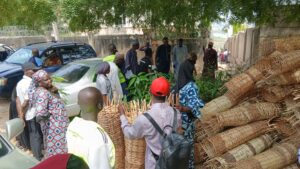
He emphasised the importance of community participation in ensuring that the trees are properly planted, protected and maintained to achieve the intended environmental benefits.
Providing insight into the significance of the exercise, a Deputy Director in the Adamawa State Ministry of Environment, Ishaya Adamu, described tree planting as an important natural solution to climate change and environmental challenges.
Speaking to community leaders and schoolchildren, Adamu explained that trees absorb carbon dioxide from the atmosphere through photosynthesis, storing carbon in their trunks, branches, leaves, roots and surrounding soil.
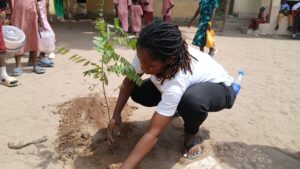
He said this natural process helps reduce greenhouse gases responsible for global warming, while tree roots and canopies play important roles in controlling erosion, retaining soil moisture and reducing the volume of rainwater flowing across the ground.
According to him, these functions help minimise surface runoff and lower the risk of flooding, particularly in communities exposed to heavy rainfall.
Adamu further highlighted the role of trees in improving air quality, explaining that their leaves help trap dust, particulate matter and harmful gases such as nitrogen oxides and sulphur dioxide.
He added that forests are essential to maintaining ecological balance because they provide habitats for wildlife, preserve biodiversity and strengthen the capacity of ecosystems to withstand the effects of climate change.
While commending the initiative, the environmental expert stressed that the survival of the seedlings would depend on proper care, especially during the dry season.
He therefore called on school authorities in the benefiting communities to encourage pupils to take ownership of the trees by assigning individual seedlings to selected students for regular maintenance.
He advised the pupils to water the trees every morning and evening, noting that consistent care would be necessary to ensure their growth and long-term survival.
Also speaking, a community leader, Timothy Gyabadom, expressed appreciation to Plan International for extending the environmental intervention to his community.
Gyabadom described the initiative as a valuable contribution to the protection of lives, livelihoods and the environment, particularly at a time when communities are increasingly exposed to climate-related challenges.
He appealed to the organisation to expand the programme to other parts of Adamawa State, with particular attention to riverine communities that face recurring threats of flooding.
He noted that expanding the intervention would help promote environmental awareness, strengthen local efforts against deforestation and encourage communities to take greater responsibility for protecting their surroundings.
The tree distribution initiative highlights the importance of collaboration between development organisations, government institutions and local communities in addressing environmental challenges and building a more sustainable future.